
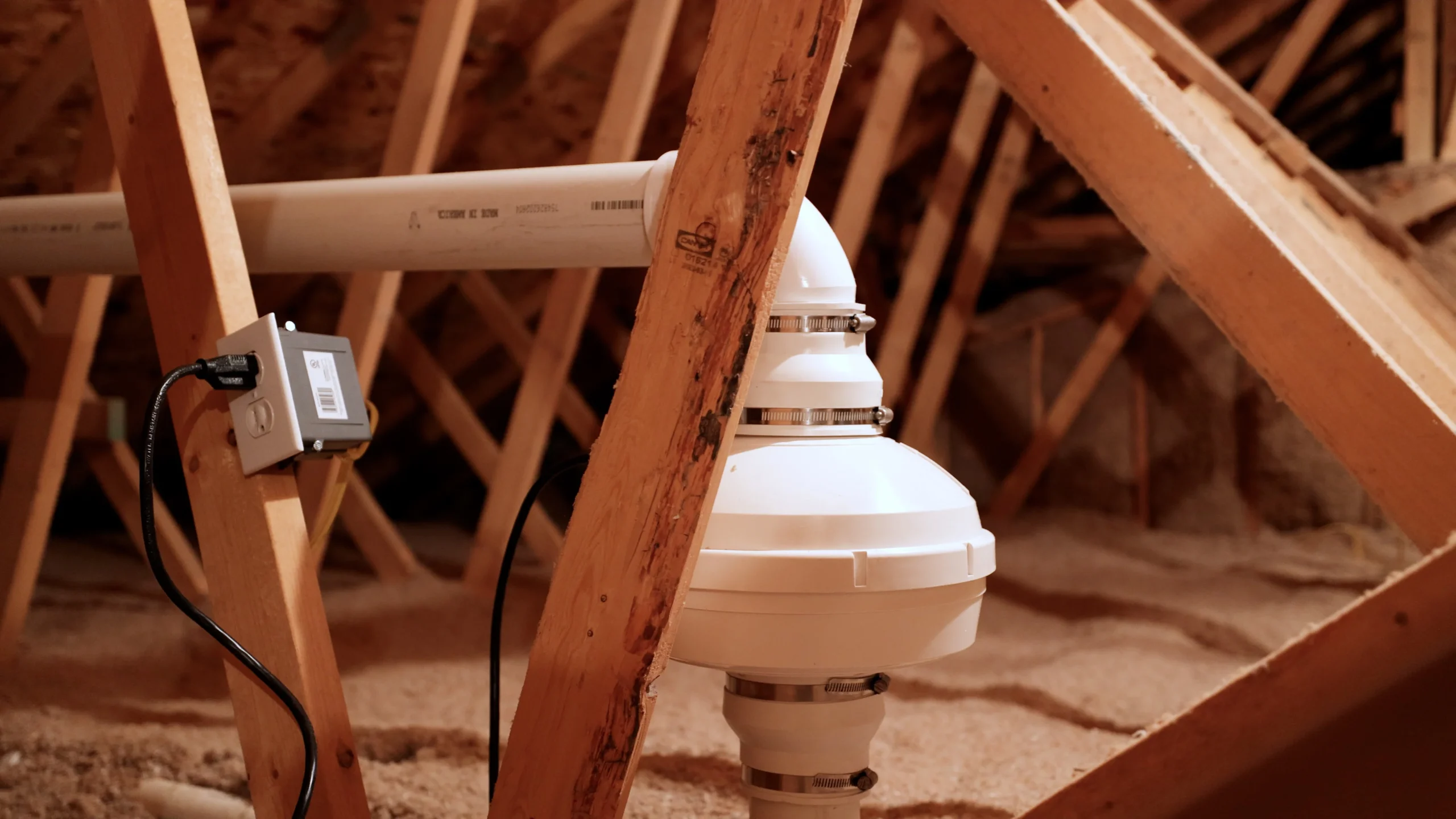
How does a radon mitigation system work?
An active radon mitigation system uses suction beneath the foundation rather than relying on the room air to pass through a filter. Air Sense describes sub-slab depressurization as its common residential approach.
Ask the installer to point out the collection point, pipe route, fan and discharge on the proposed plan. Those four locations make the design easier to understand than a generic photograph.
- Identify where gas is collected.
- Follow the pipe to its outdoor discharge.
What are the parts of a radon mitigation system?
A system combines a collection point, sealed piping, a suitable fan and an operating indicator. The exact assembly varies with the property. A diagram for your own house should also show how the installer reaches the fan for future service.
- Collection: the suction point beneath the slab or membrane.
- Transport: pipe carrying soil gas out of the building.
- Operation: a fan and its electrical supply.
- Monitoring: a pressure indicator or other warning device.
What is sub-slab depressurization?
Sub-slab depressurization means lowering pressure beneath a concrete slab so soil gas is drawn toward the collection point. Ask the contractor how they will check that suction reaches the intended foundation areas.
For a house with an addition, explain where the original structure ends. A system plan should account for separate foundation sections instead of assuming that one visible pipe serves every enclosed area.
How is a basement radon mitigation system different from a crawl space system?
A basement design works beneath the concrete slab; a dirt-floor crawl space may need a sealed membrane with suction beneath it. Do not treat a loose ground covering as a completed radon system.
Show the contractor any existing liner and ask whether its edges, seams and penetrations meet the proposed design. Keep crawl space storage and access limitations in the scope discussion.
- Identify concrete and exposed-soil areas.
- Ask whether membrane work is included.
Where is the best place to put a radon mitigation system?
The best system location is a buildable route that satisfies the applicable installation requirements and permits maintenance. Discuss interior and exterior options before work starts. An existing sump may be considered as part of a design, but its presence does not establish that it is the right collection point.
Mark sensitive areas such as finished closets, patios, roof access and planned renovations on your walkthrough notes.
Should I leave my radon fan on all the time?
Keep the fan running continuously unless a qualified professional directs otherwise for service. EPA’s reduction guide explains that an active system relies on ongoing operation.
Ask the installer to label the system and demonstrate the operating indicator. Make sure other household members know which equipment belongs to radon mitigation before anyone changes a switch or unplugs a device.
What are the downsides of a radon mitigation system?
A radon mitigation system adds equipment that needs power, inspection and eventual service. Its visible pipe route may also matter to the homeowner. Discuss these tradeoffs during design, when options can still be compared.
- Ask where operating instructions will be stored.
- Check how the fan can be accessed.
- Discuss noise concerns near bedrooms.
- Include future testing in your ownership plan.
Questions before you book
Is the pressure gauge a radon detector?
No. The operating indicator and a radon measurement answer different questions. Ask for a demonstration of the indicator and arrange radon testing to evaluate the indoor level.
Does every house need the same fan?
No. Request the reason for the fan selection in the proposed design instead of comparing equipment only by size.
Can a system be hidden inside the house?
Some houses permit an interior route. Confirm the actual route, access and finish work during the assessment.