
Exterior Radon Mitigation System Appearance: Blending it Discreetly
By Jake Lusby · Air Sense Environmental
An exterior radon system can be planned around a home’s appearance, but the route must also work for the foundation, fan, exhaust and maintenance access. St. Louis homeowners should compare feasible routes before choosing colors or concealment. Ask the installer to identify the visible components and any restrictions on painting, screening or enclosing the proposed equipment.
Use the questions below to compare the proposed pipe route, fan position, electrical work, finishes and maintenance access. Ask the contractor to put agreed options and responsibilities in writing before work begins.
Agree on the visible details before installation
Use photographs of the actual wall and roofline to discuss options. Mark the proposed pipe, fan, brackets and penetrations, then ask which alternatives change the work or cost. Visual examples can communicate a preference, but a photograph of another home is not a design for yours.
- Ask which components will remain visible from the street, patio and main windows.
- Confirm finish treatment with the installer and equipment instructions before painting or enclosing anything.
- Record who restores penetrations and finishes, and preserve the access needed for inspection or replacement.
For the wider decision, read Who Installs Radon Mitigation Systems in St. Louis, and What Should the Job Include?.
What Visible Components Does an Exterior Radon Mitigation System Have?
An active soil-suction system uses piping and a powered fan to draw soil gas from below the home and discharge it outdoors. The EPA guide describes this reduction method and the need for a warning device. Ask the installer to identify which parts will be visible on your home; not every design has the same exterior components. You can also read our radon mitigation overview.
The Vent Pipe
For soil-suction exhaust, the EPA guide’s contractor-work checklist says the outlet must vent above the roof surface and at least 10 feet above ground. It also specifies at least 10 feet from windows, doors or other openings that could admit exhaust if the outlet is not at least 2 feet above those openings. Have the installer check the actual openings and applicable requirements; a drawing made only for appearance is not a complete installation specification.
The Radon Fan
An active system’s fan should operate continuously. The EPA guide says the exhaust fan must not be in or below a livable area, and an outdoor fan must meet local building codes for exterior use. Ask the contractor to explain the proposed position, mounting and service access. Do not assume an exterior location alone guarantees quieter operation or a particular indoor radon concentration.
Electrical Components
Ask the installer to show the proposed electrical route and identify any visible conduit or connections. The EPA guide requires electrical connections to follow local electrical codes; it does not establish one universal outlet or circuit arrangement. Also ask how to read the system warning device. A liquid manometer indicates pressure, not the indoor radon concentration.
How Can Exterior Radon Systems Be Discreetly Placed on Your Home?
Compare proposed routes before choosing one for its appearance. Ask the contractor to identify which options fit the home and preserve required exhaust placement, suitable fan location and maintenance access. A less visible route is an option to assess, not a promise that every house can conceal the system.
Routing Along Architectural Features
Ask whether a corner, a line near existing exterior features, or a less visible side of the house offers a suitable route. Have the contractor explain the trade-offs before selecting it. Do not move or shorten an existing exhaust pipe just to align it with a downspout or hide it from the street.
Strategic Fan Location
Ask the contractor to identify permitted fan positions before considering how visible they are. Do not treat dense planting, shade or a garage location as proof that an installation is suitable. The fan-location restrictions and the equipment instructions take priority over concealment.
Vent Pipe Height and Distance Requirements
The EPA checklist specifies discharge above the roof surface and at least 10 feet above ground. For openings that could allow exhaust to reenter the home, it specifies 10 feet of separation when the outlet is not at least 2 feet above the opening. Ask which current standards and local requirements govern your installation. These precautions reduce reentry risk; they do not certify an indoor radon result.
Minimizing Visible Conduit
Ask how electrical work will be routed and whether an alternative route is permitted. Include the agreed scope in the proposal. Do not attach wiring to a vent pipe or conceal connections based only on an appearance suggestion in this article; electrical installation must follow applicable requirements.
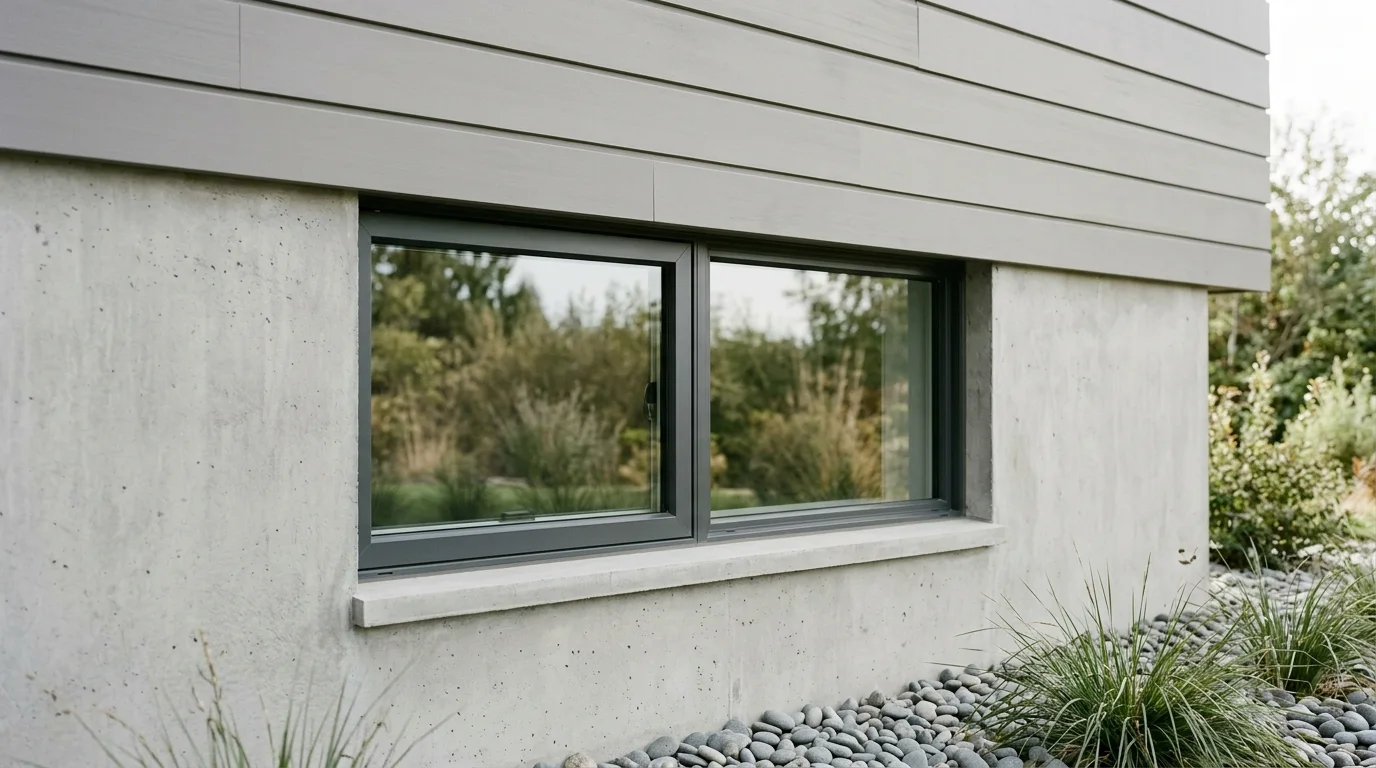
What Design Techniques Blend an Exterior Radon System with Your Home’s Aesthetics?
Discuss finish, landscaping and screening preferences with the contractor, but do not assume that painting or an enclosure is suitable for every component. Get a property-specific proposal before making cosmetic changes. Appearance does not demonstrate system performance.
Color Matching and Painting
Before painting any system component, ask the installer to identify its material and obtain the relevant manufacturer instructions for coatings. Agree on the proposed finish in writing. This guide does not approve a paint product, an exact color match or coating a fan, label or warning device.
Landscaping and Planting
If you want planting near the system, ask the contractor to identify access areas and any equipment-specific restrictions first. Choose and maintain landscaping around that reviewed plan rather than using dense foliage to hide components that need inspection or service.
Custom Enclosures
Do not build a box around a fan merely because it matches the house. Ask the installer whether any enclosure is permitted by the specific equipment instructions and applicable requirements, and how the equipment would be inspected and serviced. This article does not supply an approved enclosure design or ventilation specification.
Material Selection
Ask the installer which pipe materials, fittings and finishes are suitable for the selected design, then document the agreed choices. Do not substitute decorative materials or covers without checking compatibility and installation requirements.
Does an Exterior Radon System Affect Home Value?
This article cannot predict whether a visible system will increase, decrease or leave a particular home’s sale price unchanged. Ask a real estate professional about the transaction and keep the installation and test records available. A mitigation system is not a guarantee of a sale or freedom from future maintenance costs.
The EPA Perspective on Home Sales
The EPA Home Buyer’s and Seller’s Guide discusses radon testing and fixing elevated levels during home sales. Its health guidance does not establish a dollar value for a discreet-looking system. EPA recommends fixing homes at or above 4.0 pCi/L, and lower concentrations still carry risk. Use test results and the actual transaction requirements rather than appearance to assess the radon issue.
Buyer Perceptions of Mitigated Homes
Offer prospective buyers the installation details, operating instructions, available test reports and actual warranty terms. Let them evaluate that information. Do not represent the system as eliminating all future radon work or promise that every buyer will view it as an advantage.
Why Discuss Appearance Before Installation?
Discuss appearance while comparing installation options so the written scope reflects your preferences and the technical requirements. This is a planning recommendation, not evidence that a particular finish makes homeowners more likely to mitigate or maintain a system.
Overcoming Mitigation Delays
If appearance is a concern, raise it when requesting a proposal rather than modifying a completed system yourself. Ask the contractor to explain feasible options and their costs. Do not let a preferred appearance override necessary exhaust placement or access.
Long-Term System Maintenance
The EPA guide recommends checking the warning device regularly and retesting a mitigated home at least every two years. Follow the written operating and maintenance instructions, and have faults assessed by a qualified contractor. A tidy exterior, running fan or normal pressure reading does not replace a radon measurement or guarantee a result below 4.0 pCi/L.
Can an exterior radon pipe be routed through the roof instead of up the side of the house?
Discuss an internal route through the roof and an exterior wall route with the contractor. The feasible route depends on the home and system design. The exhaust still needs suitable termination; this article does not establish that one route is always available, preferable or more common.
Challenges of Roof Routing
For any proposed roof penetration, ask who is responsible for the roof work, weatherproofing and any related repairs. Include those responsibilities and costs in the written scope rather than assuming one route is always cheaper or less disruptive.
When Roof Routing Makes Sense
Ask the contractor to evaluate the actual building rather than assuming a through-roof route is reserved for new construction. After installation, arrange follow-up testing to measure performance. Confirm who schedules and pays for that measurement; do not assume it is included in every installation.
Does the type of siding on my house affect how the radon pipe can be blended?
Give the installer details of the siding and the appearance you want. Ask how the proposed route, attachment points and permitted finishes will work with that exterior. Do not assume the siding alone determines whether a pipe or fan can be concealed.
Vinyl and Wood Siding
For vinyl or wood siding, discuss routing and any permitted color treatment before installation. Follow the component manufacturer’s coating instructions rather than assuming any PVC pipe or fan can be painted to an exact match.
Brick and Stone Exteriors
For brick or stone, ask the contractor to compare feasible routes and explain the proposed attachment and finish work. Any screen or enclosure needs a separate suitability check; matching the masonry does not make an enclosure acceptable for the equipment.
Are there any restrictions on landscaping around an exterior radon system?
Ask the installer for landscaping restrictions that apply to the actual fan, piping, electrical work and service access. Avoid a universal distance rule: this article does not establish a two-foot foliage clearance for every system.
Protecting Equipment and Exhaust Access
Have the installer explain what must remain unobstructed and accessible. Do not infer that a gap in the shrubs proves the fan is operating correctly or that the indoor radon level is low. Follow the specific equipment instructions instead of treating landscaping as a performance test.
Ensuring Maintenance Access
Keep the agreed service-access area usable, and ask before changing planting or adding covers around the system. Obtain any required spacing from the installer and applicable equipment instructions. A fixed two-foot rule is not provided here.
For a St. Louis home, discuss the proposed pipe route, visible components, finish options and follow-up testing with Air Sense Environmental. Ask what is feasible for your property and what the written scope includes. Contact us to discuss your project.
Prepared with AI assistance using the linked primary sources. For property-specific advice, contact Air Sense Environmental.